How to Choose the Right Conveyor Belt Rollers for Your Needs?
Selecting the right conveyor belt rollers is crucial for efficient material handling in various industries. The global conveyor belt market is projected to reach $6.5 billion by 2027, highlighting its importance. Conveyor belt rollers are integral components that affect the performance and longevity of the entire system. They support the belt's load and ensure smooth transport, influencing productivity significantly.
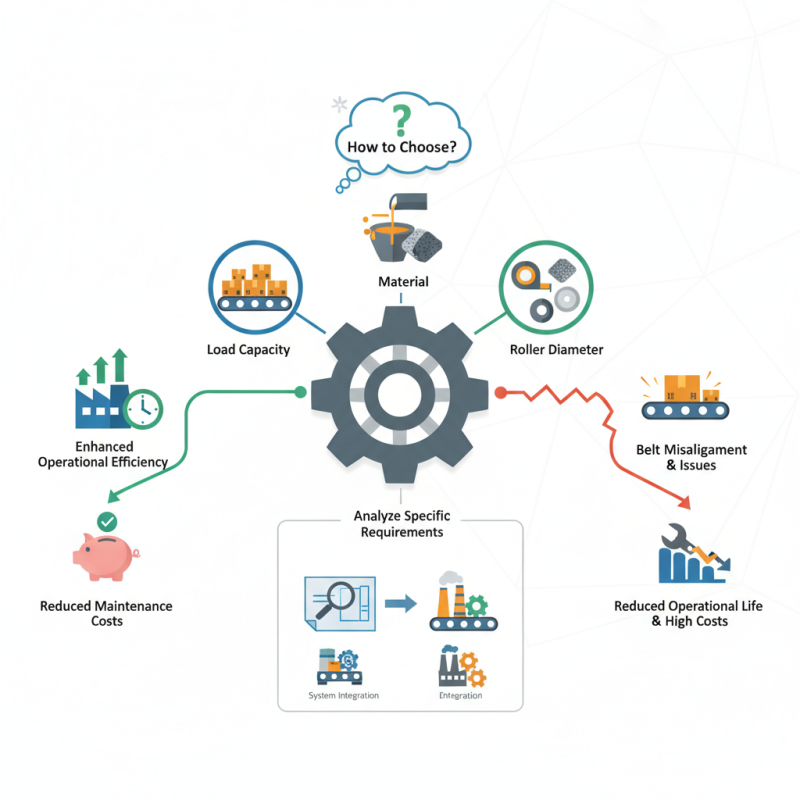
According to industry reports, the right choice can enhance operation efficiency by up to 30%. Factors such as load capacity, material, and roller diameter play vital roles in this selection. However, many businesses overlook these aspects. They may settle for generic models instead of tailored solutions. This oversight can lead to unforeseen maintenance costs and reduced operational life.
Choosing conveyor belt rollers should not be a hasty decision. The wrong type may escalate issues like belt misalignment. It’s essential to analyze your specific requirements thoroughly. Consider where the rollers will be used and their interaction with other system components. This reflection could save time and resources in the long run. Ultimately, the right conveyor belt rollers are not just accessories; they are pivotal to achieving optimal results.
Understanding the Types of Conveyor Belt Rollers Available
When selecting conveyor belt rollers, it's crucial to understand the various types available. You can find options like idler rollers, return rollers, and guide rollers. Each serves a specific purpose, impacting efficiency and durability. Idler rollers support the weight of the belt and its cargo. Return rollers ensure the belt runs smoothly on its return path. Choosing the right types means evaluating your specific needs.
Material choice affects performance too. Steel, rubber, and plastic are common options. Steel offers strength but can be heavy. Rubber is quieter and helps reduce wear. However, plastic is lightweight, making it suitable for lighter loads. Each material has its pros and cons, and sometimes the right choice is not obvious.
Pay attention to dimensions and load capacity. Rollers must fit correctly within your system's design. A miscalculation could lead to operational challenges. Additionally, maintenance needs vary by type. Some rollers require regular inspections while others might need replacement more frequently. Mistakes in selection can lead to downtime and costs. Reflect on your operation's long-term goals as you make this important decision.
Assessing the Load Capacity Requirements for Your Application
When selecting conveyor belt rollers, load capacity is crucial. Understanding the weight requirements of your materials is essential. Heavy materials demand robust rollers. They endure greater stress. If your rollers can’t handle the load, they’ll wear out quickly. You may face costly downtimes and repairs. Make sure to measure the load accurately.
Consider safe working loads and factors of safety. Different applications may require different calculations. A roller that’s sufficient for one material may not suit another. Smaller, lighter loads can often use simpler designs. However, neglecting to assess these requirements may lead to serious problems.
Don't overlook environmental factors. Temperature and humidity can impact performance. High temperatures may weaken materials, while moisture could lead to corrosion. Adapt your choice based on these factors, too. Some may rush decisions only to face challenges later. A thoughtful approach leads to better long-term results.
Evaluating Material Compatibility for Conveyor Rollers
Choosing the right conveyor belt rollers requires careful consideration of material compatibility. Different industries have specific needs. For instance, food processing may require stainless steel rollers to prevent contamination. In contrast, mining operations often use rollers made from heavy-duty polymers or steel to withstand rugged conditions.
According to a report by Freedonia Group, the conveyor roller market is expected to grow significantly, with a projected CAGR of 4.5% through 2027. This growth highlights the importance of selecting materials that can handle diverse applications. Rollers must resist wear, corrosion, and temperature variations. The material's properties directly impact performance and maintenance costs.
Compatibility is not just about the material. It also involves load capacity and environmental factors. For example, rubber-coated rollers work well in low-impact scenarios but may not survive extreme environments. Evaluating each aspect is essential. A mismatch could lead to expensive downtime and repairs. Regular audits of roller performance and material selection can prevent unforeseen challenges. This thorough approach helps ensure efficiency in operations.
How to Choose the Right Conveyor Belt Rollers for Your Needs? - Evaluating Material Compatibility for Conveyor Rollers
| Roller Type | Material | Max Load (lbs) | Diameter (inches) | Applications |
| Standard Steel Roller | Steel | 500 | 6 | General Industrial Use |
| Heavy-Duty Roller | High-Density Polyethylene | 1000 | 8 | Heavy Machinery |
| Corrosion-Resistant Roller | Stainless Steel | 750 | 6 | Food Processing, Chemical Transport |
| Light-Duty Roller | Aluminum | 300 | 4 | Packaging, Light Materials Handling |
| Plastic Roller | Polypropylene | 200 | 5 | Baggage Handling, Lightweight Applications |
Considering Roller Width and Diameter for Optimal Performance
When selecting conveyor belt rollers, roller width and diameter are crucial factors. The roller width impacts how materials are transported across the belt. A narrower roller may struggle to support wider loads. If the load exceeds the roller width, this can lead to wear and tear. It’s essential to evaluate the load size regularly.
Diameter plays a significant role too. A larger diameter roller can provide improved stability, especially for heavier loads. However, it may require more power to operate. Consider the trade-offs of using larger rollers. Smaller rollers can be more efficient for lighter, smaller loads but might cause potential misalignment.
Choosing the right combination takes experimentation. A detailed analysis of your operational needs will help. Don’t overlook the environment where the conveyor operates. Factors like temperature, moisture, and exposure to chemicals all influence roller performance. Ensuring that your choices reflect real-world conditions may require adjustments and tests. Balancing these details contributes to optimal conveyor performance.
Analyzing Maintenance Needs and Longevity of Conveyor Rollers
Choosing the right conveyor belt rollers is crucial for operational efficiency. The lifespan of these rollers plays a significant role in maintenance needs. According to a recent industry report, poorly maintained rollers can reduce conveyor efficiency by up to 30%. Regular inspections can help prevent unexpected failures.
Material selection affects both maintenance and roller longevity. For example, steel rollers last longer but require more maintenance compared to composite rollers. A study by the Conveyor Equipment Manufacturers Association found that composite rollers can last up to 50% longer. However, they may not be suitable for heavy loads. Balancing durability and load capacity is essential.
Operators often overlook the importance of alignment and installation. Misalignment can lead to premature wear and increased maintenance costs. A report from the National Institute of Standards and Technology indicates that a simple realignment can enhance roller life by 20%. This highlights the need for careful planning and regular checks in conveyor system management.